 TFS Gulf




- For years, Global Capability Centres (GCCs) have quietly run world-class end-to-end finance & tax functions from Bengaluru, Hyderabad, and Gurugram.
- But inside CPA firms’ offshore delivery centres…India is still treated as a back office.
- Why? The complex work never moves offshore.
- Now, GCC professionals are going independent to crack it finally.
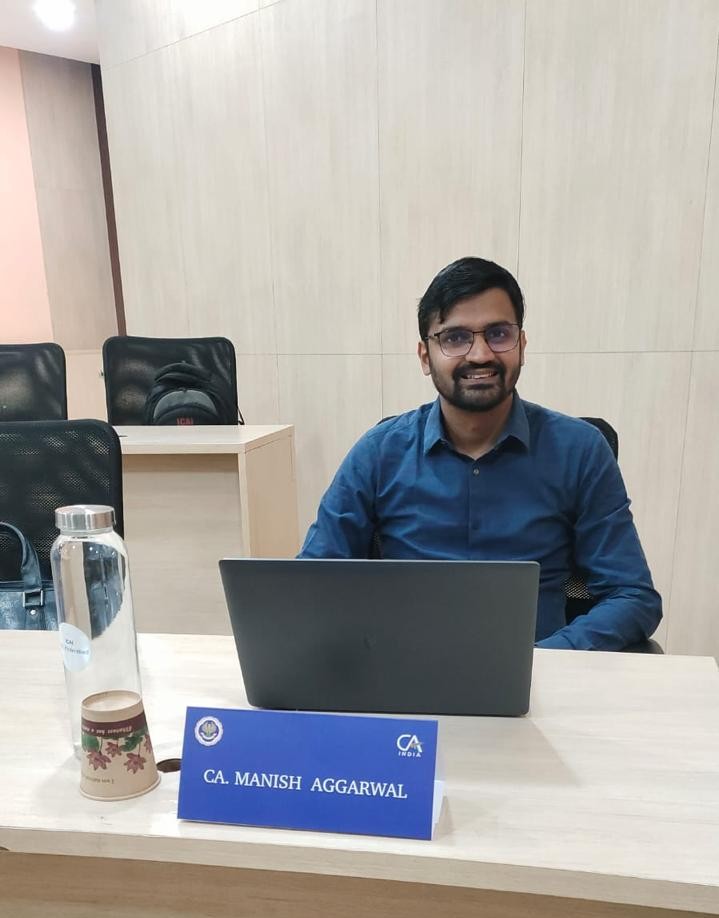
- Manish Aggarwal, a CA and former Regional Tax Leader at UiPath, in his early 30s, is one of them.
From Big 4 to GCC
In 2020, I left Deloitte and joined UiPath’s GCC in Bengaluru.
Back then, shifting from a Big 4 to a GCC wasn’t exactly the obvious career move. The wave hadn’t hit yet.
Most of my peers thought I was making a sideways step…But what I walked into changed everything.
My role? I was personally managing tax compliance across 26 countries. Saudi Arabia, UAE, China, Canada, Israel, Kenya, Ukraine, and Malaysia simultaneously.
I learned enough Chinese and Korean just to understand what local tax authorities were actually saying. And when UiPath went public, I was part of the finance operations steering the billion-dollar IPO.
My compensation reflected the responsibility.
I joined UiPath at around ₹32–33 lakhs per annum. And by 2025? It rose to ₹50+ lakhs, including salary, restricted stock options, and bonus.
And it wasn’t just about money; they also provided us with world-class perks.
I am talking an iPhone every two years, full OPD coverage, wellness benefits, gym, office cabs, and paternity leave.
But then…I started seeing a gap
By 2023-24, the global accounting offshoring market was growing fast, and the Indian market was booming.
US CPA Firms with billions and millions in revenue, like Armanino, Withum, BDO, had all set up their largest offshore centres in India.
On the surface, it looks like a massive shift, but if you look closely, most of these centres are still focused on:
- High-volume, low-margin compliance
- Standard tax filings
- Backend support
Meanwhile, GCC professionals like me spent years running the complex work:
- Multi-jurisdiction tax compliance,
- Transfer pricing across a dozen countries,
- Cross-border structuring for companies going public.
Two very different skill sets, sitting in the same country. One of them is dramatically underused in the outsourcing/Offshoring market.
That’s when the idea clicked
What if I could bring GCC-level expertise (complex multi-jurisdiction compliance, transfer pricing, cross-border structuring) to companies that need it but can’t justify building their own captive centre?
Also, why chase only crowded markets like the US, Canada, or Australia?
Why not look at Israel, South Africa, Kenya, Ukraine, and Mexico, where there is real demand, less competition, and stable margins?
But I still “did not quit.”
I tested the idea cautiously; some weekend projects here and there, small transfer pricing assignments.
Could I really deliver independently outside a corporate structure?
Then, one evening, returning from a conference, I bumped into a senior advocate at the Delhi High Court.
His advice was simple but encouraging: “You have the exposure. Build a legacy of your own.”
Surprisingly enough, it was the exact advice my wife had been giving me for a while.
That was the ultimate push I needed.
Over the next eight to nine months, I planned meticulously.
The real prep was personal
First, I sorted my finances and planned all my major expenses upfront.
I bought a home with no loan hanging over my shoulder. Because I knew that once I ventured out, unpredictable cash flows would become the reality. I didn’t want an EMI weighing me down.
What else helped? My wife, who is also in practice, meant we had two streams of income.
Finally, in February 2025, I incorporated the firm.
This wasn’t a leap of faith… took 2.5 years
I gave myself an additional six months to build some traction before making a complete transition.
My initial goal was modest. I wanted to secure two or three clients and validate the model first.
Luckily, I signed my first client on the very first day, followed by a couple more shortly after.
That early validation gave me the confidence to finally go all in.
What nobody tells you about outsourcing
Running an outsourcing firm is harder than it looks from inside a corporate setup.
The biggest challenge isn’t clients, pricing, or competition. It’s people.
In a domestic CA practice, if a resource leaves, the client relationship usually survives, partner-driven. In cross-border outsourcing, a key person leaving mid-engagement directly hits delivery.
You’re managing talent across time zones, cultures, and expectations simultaneously.
And then there’s macro uncertainty. US tariff policy, the HIRE Act, and shifting cross-border regulations.
Clients have already asked for price reductions because their margins got hit overnight.
Also read: This CFO quit the corporate world to enter the Outsourced CFO space. Here are his learnings.
Wrapping up…
Manish isn’t an outlier.
Across India’s GCC ecosystem, a new class of professionals — finance, tech, legal, HR — built on global exposure and serious compensation, is quietly going independent.
They’re not chasing the same outsourcing playbook. They’re building something the market hasn’t seen yet: offshore delivery at GCC depth.
FAQs
Q: What are some profitable outsourced finance services?
1. Virtual or Fractional CFO Services
2. Financial Planning and Analysis (FP&A)
3. Specialised Tax Preparation and Compliance
4. Controller Services & Audit Support
5. Specialised Technology & Automation Implementation
6. Investment Banking Research & Valuation
Q: How to start my own outsourced finance and accounting business?
- Map out a 1–2 year runway.
- Build your network while still in your Big 4 or GCC role.
- Create a personal brand.
- Learn different tools such as ERPs and global tax technologies, or whatever it is that you want to provide.
- And attend global tax and accounting conferences to find potential clients.
