 TFS Gulf




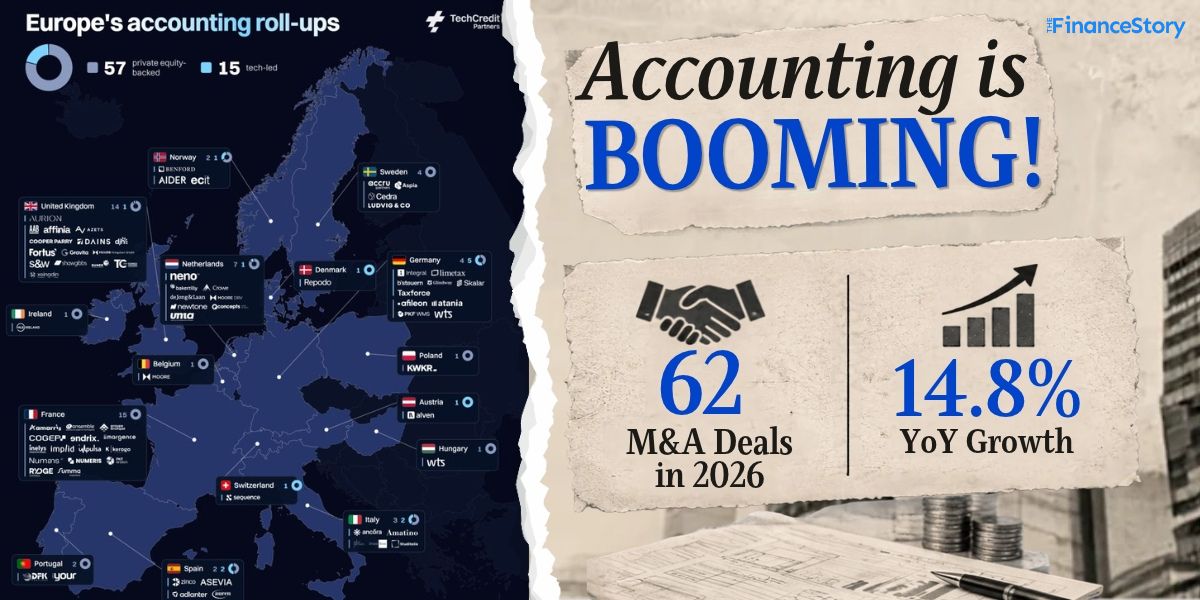
- Accounting M&A market is heating up, with 62 deals in 2026…Up 14.8% year-on-year!
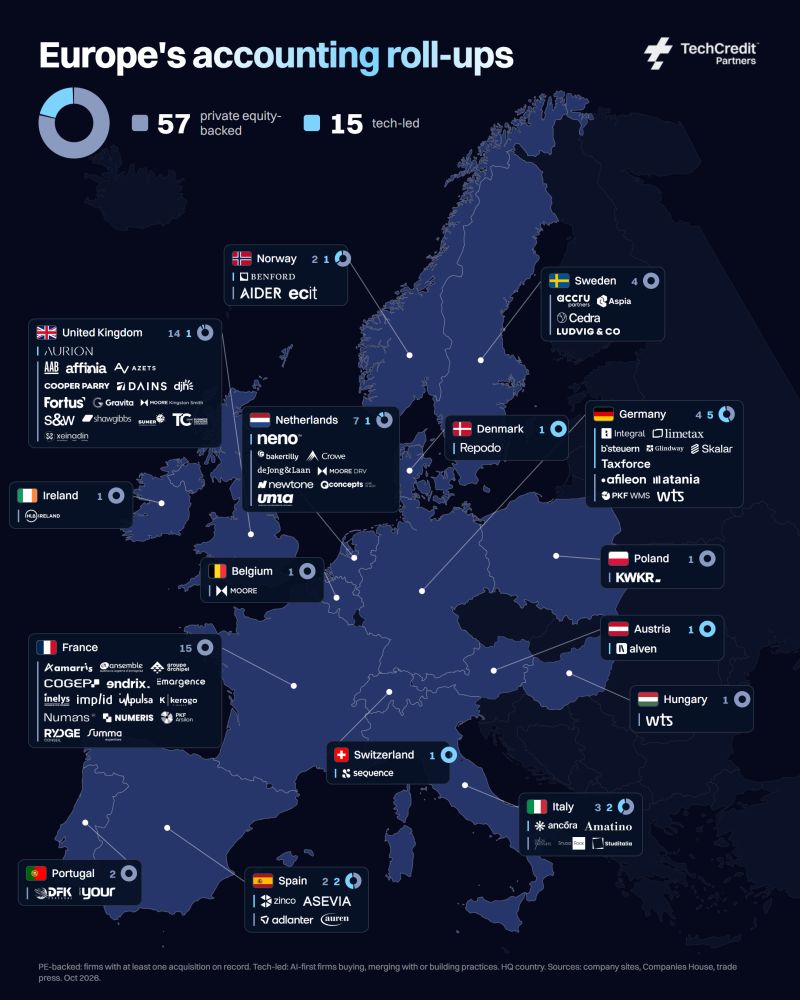
- To track Europe, in a LinkedIn post Resat Ozutok a former Morgan Stanley investment banker & co-founder of TechCredit Partners mapped 72 accounting platforms across 16 European countries.
- What he found in Europe? Two playbooks are emerging: PE-backed consolidators and AI-native challengers.
- Big question…Will AI disrupt accounting first, or will consolidation?
PE-backed platforms: Why build when you buy!
According to Ozutok, in Europe, 57 of the 72 Accounting platforms are backed by Private Equity (PE).
Now, many of them had started acquiring practices years before generative AI took off.
Their playbook is straightforward: buy established firms, combine operations, cross-sell higher-margin advisory services, and layer technology on top.
Key players include Azets, Xeinadin, Cooper Parry, Accru Partners, and AIDER, with PE activity heavily concentrated across three markets:
- France: 15 platforms
- United Kingdom: 14 platforms
- Netherlands: 7 platforms
Notably, Waterland Private Equity alone backs six platforms across five countries.
But why does PE love accounting? Recurring tax, audit and compliance revenues, sticky clients and plenty of opportunities to sell additional advisory services.
New challengers…AI-native accounting firms
Instead of acquiring legacy firms first and fixing their tech stack later, 15 of the 72 are tech-first platforms started directly with software and then buy practices to run on it.
The idea is simple: build an accounting business where AI agents handle more of the work, with qualified professionals overseeing the output where required.
According to Ozutok’s mapping, only three AI-native players have publicly bought firms so far:
- Zinco (Madrid): Led by David Alonso Martinez and Alvaro Mato, moving at a rapid pace with multiple acquisitions already under its belt.
- Integral (Berlin): Led by Lukas Zörner, building an AI-powered accounting firm backed by LinkedIn co-founder Reid Hoffman.
- Limetax (Berlin): Led by Christoph Gamon, an AI-led platform actively buying practices.
The other 12 challengers are building from scratch or merging such as:
- Germany: Skalar -Digitale Steuerberatung (Björn Goß, Munich) and Taxforce (Caspar Gerleve, Berlin)
- Italy: Ancora (Andrea Chirolli, Milan) and Amatino
- Spain: Asevia (Madrid)
- Austria: alven (Vienna)
- United Kingdom: Aurion (London)
- Switzerland: wearesequence.ai (Geneva)
- Netherlands: Neno (Amsterdam)
- Denmark & Norway: Repodo (Copenhagen) and Benford (Oslo) both building AI-native audit firms
But the broader ambition is similar: use technology to rethink how accounting services are delivered and how these businesses can scale.
Another big difference…Financing
The two groups are not just building accounting businesses differently…They are financing them differently, too.
Mature PE-backed groups have years of steady profits on their books, which gives banks and bond investors the confidence to lend them massive amounts of money. Accru Partners, for instance, raised a €550 million bond in September 2026 to refinance loans and buy more firms.
Most AI-native startups, however, are less than two years old. Without years of audited profits, banks are hesitant to lend to them…meaning they have to rely on venture capital cash to buy their first few practices.
In fact, among all 15 tech-first firms mapped, Limetax’s €30 million credit line from German banks was the only publicly disclosed bank loan.
But why does this matter?
Ozutok’s broader argument is that PE helps get an accounting roll-up started, while debt can help it scale since the business has earnings and an operating track record.
He makes it clear that borrowing more money does not automatically make a roll-up successful.
So, who wins?
The real debate sparked by Ozutok’s mapping played out in his comment section.
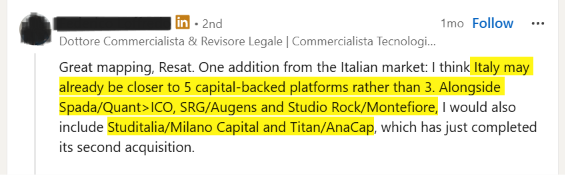
Italian practitioner noted that five PE-backed roll-ups are already fighting for turf alongside AI-native players.
“Will technology be added after consolidation, or will an AI-native operating model become the engine of consolidation?”
Ozutok summed up in one line: “Either now or later, it’s clear AI is taking over though.”
Source: Resat Ozutok’s LinkedIn mapping of 72 accounting roll-up platforms across Europe. Figures and financing examples are based on his analysis.
