 TFS Gulf




- On March 27, KPMG UK announced a round of layoffs affecting around 600 employees. A month later…KPMG UK is in the news yet again.
- Why? KPMG Equity partners are being quietly demoted into…salaried Partners.
- According to The Financial Times, only a handful have been affected so far.
What’s happening at KPMG UK?
KPMG has been the most vocal in its restructuring efforts, primarily focusing on “de-partnering” and moving equity partners to salaried roles.
This allows the firm to retain its experience without letting it “dilute” the profit pool shared by top performers.
So,
- Title remains intact (You are still a Partner, but on a Salary)
- Responsibilities largely stay the same
- Only Profit participation is removed
What makes this shift more disruptive
…is how it’s happening.
In the past, underperformance often meant a soft exit via retirement.
Now, firms are moving toward active portfolio-style management of partners.
Instead of slow transitions:
- Partners are being called into “career conversations”
- Some are told without prior warning that their equity status is being removed
Some have already exited, saying they felt blindsided despite receiving positive feedback and no prior warning of the change.
But why is KPMG demoting Partners?
Protecting profits
Big 4 firms, including Deloitte and PwC, are facing:
- Slowing consulting demand
- Margin pressure
- Increased competition
- Rising investment in AI and tech
The response? Tighten control over who gets a share of the pie.
We can already see this playing out in the financials of KPMG UK.
Average profit per partner rose to £880,000 in 2025, an increase of 11%, even as the overall partnership base continued to shrink.
Between 2021 and 2023, the partnership size fell to its lowest level in over 20 years.
During the same period, equity promotions also slowed sharply.
Also read: KPMG fires 600 employees in UK…11% pay hike for partners
Reward partners who bring in revenue
Internal culture is shifting from “tenure” to “revenue.”
KPMG is targeting what insiders call HUNCs: High-Unit, No-Client partners.
These are senior leaders holding massive equity stakes (units) based on years of service rather than current billings.
- The feedback? Some have grown “slightly arrogant,” expecting annual unit increases while their client portfolios stagnated.
- The new rule: “Eat what you kill.” As KPMG UK CEO Jonathan Holt put it, the goal is to reward those bringing in business, not those who have simply “been around longer.”
Young high performers are frustrated
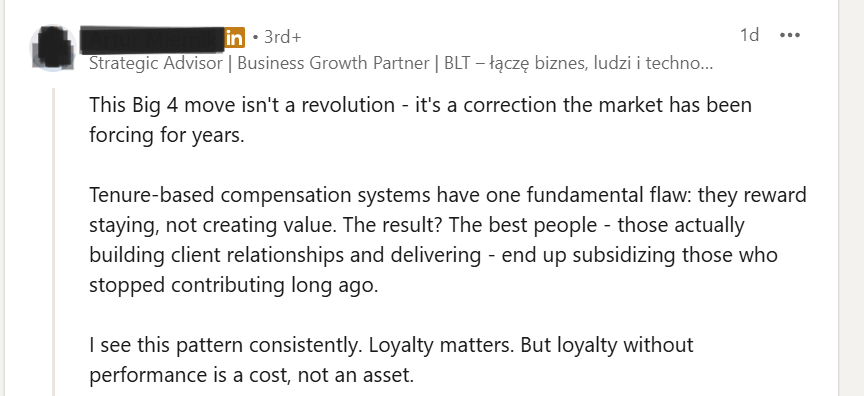
According to chatter on LinkedIn, especially a post by James O’Dowd (CEO, Patrick Morgan):
“The highest performing younger Partners (the ones bringing in the fees and building the next generation of client relationships) have been watching their returns get diluted by Partners who haven’t won real work in years.
Tenure is rewarded based on performance.
Favouritism and protected unit allocations quietly subsidise people who have stopped contributing.”


Also read: Big 4 Managers, Directors in India are looking for an EXIT…Ghosting Partner dream
Will India see a loud “partner demotion wave”?
Many insiders we spoke to said…No.
But Big 4 India will see something more important:
The slow disappearance of the idea that making partner automatically means sharing in profits for life.
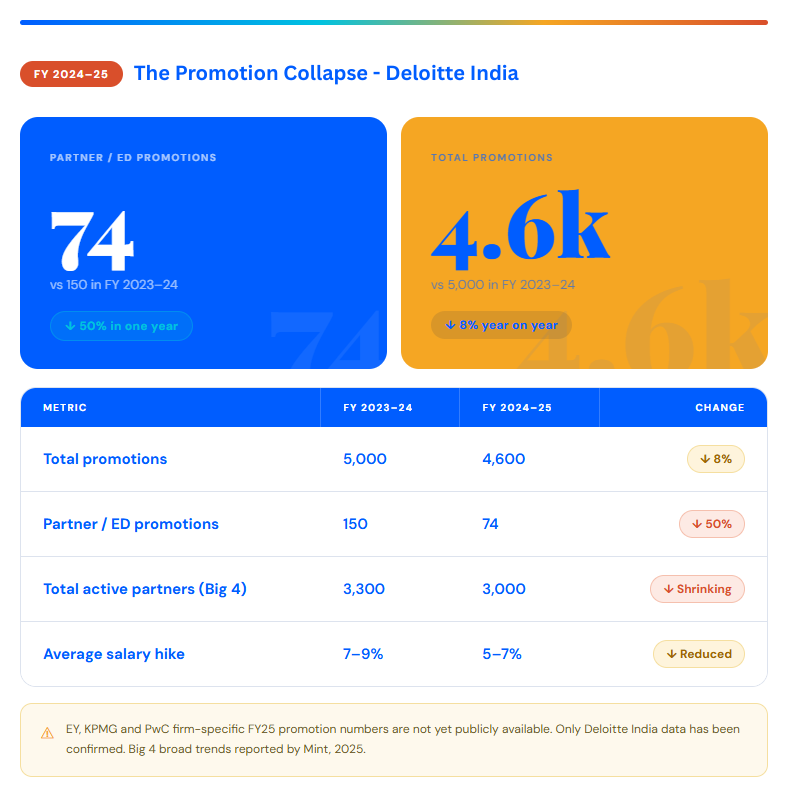
Let us not forget that in 2024, Deloitte India offered early retirement to partners aged 55 and above through a “Golden Handshake” programme… another signal of leadership reshaping at the top.
 Wrapping up…
One thing is for sure, a new Partnership structure is emerging…
- Smaller equity partner group
- Larger salaried or non-equity partner layer
- Clearer separation between ownership and execution
As per FT, even EY UK has been demoting equity partners to salaried Partners and cleaning its house.
And across the Big 4, equity partner promotions have also fallen to a five-year low in 2025.
FAQs
How long does it take to make partner at a Big 4?
It usually takes 15–18 years of career progression. However, there have been multiple instances where
people made partner within just 10 years.
How to become a Big 4 partner?
Apart from deep technical expertise (audit, tax, consulting, etc.), you must build a strong client network, show an ability to generate revenue, have great leadership skills, and, most importantly, play the office politics game, right.
What happens when a Big 4 partner is demoted?
It depends on the partnership agreement, but typically:
- Lose profit-sharing (equity status),
- and move to a fixed salary plus bonus compensation structure.
- The capital portion of their buy-in is usually returned, often over 3–5 years.

