 TFS Gulf



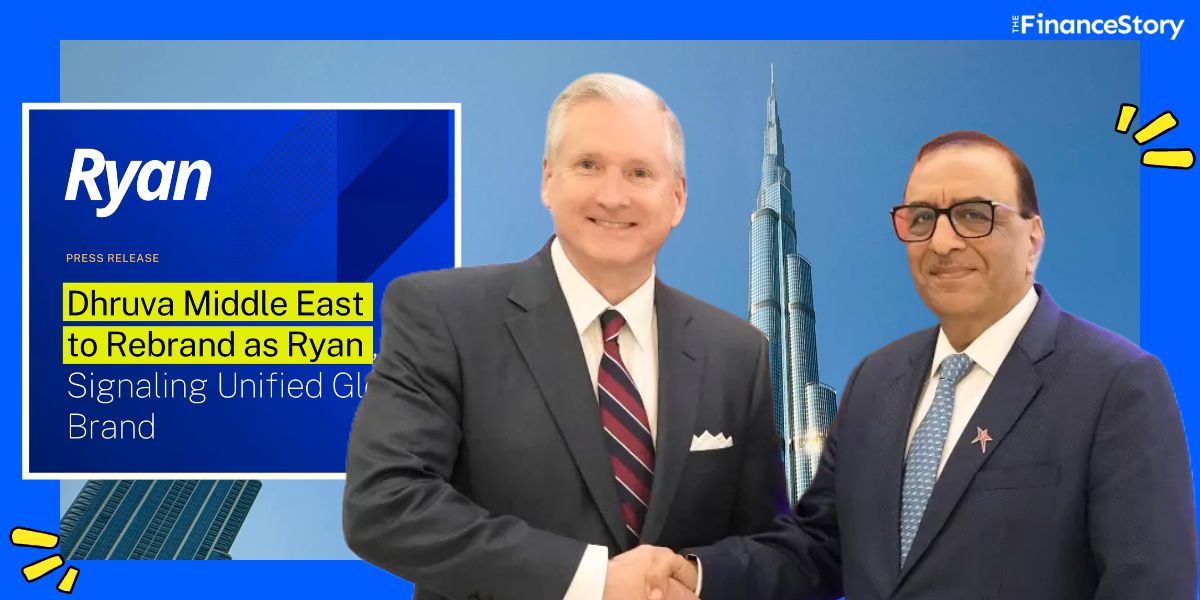
- In 2025, PE-backed US tax giant “Ryan” bought a majority stake in Dinesh Kanabar’s “Dhruva Advisors”.
- Now, by the end of 2026, Dhruva Middle East will become Ryan.
- Yes, Dhruva is disappearing from Dubai, Abu Dhabi and Riyadh.
- And no, Dhruva wasn’t a weak boutique looking for a rescue. It went head-to-head with the Big 4…So why give up the name?
The real story started last year
In September 2025, Ryan acquired a majority stake in Dhruva Advisors, whose FY2024 revenue was INR 210 crore, according to Tracxn.
But this wasn’t simply a US firm buying an Indian firm.
- Dhruva’s Partners received equity in Ryan
- Founder Dinesh Kanabar became Vice Chairman of Ryan
For Ryan, it was a fast way to expand across India, the Middle East and Singapore.
For Dhruva, it meant access to global tax technology, software, AI capabilities and the capital to keep investing in them.
Ryan is not a small US tax firm. It has 7,100+ professionals, 74,000+ clients and operates across 80+ countries. It calls itself the world’s largest firm dedicated exclusively to business taxes. And secured a $1.2 billion private equity investment.
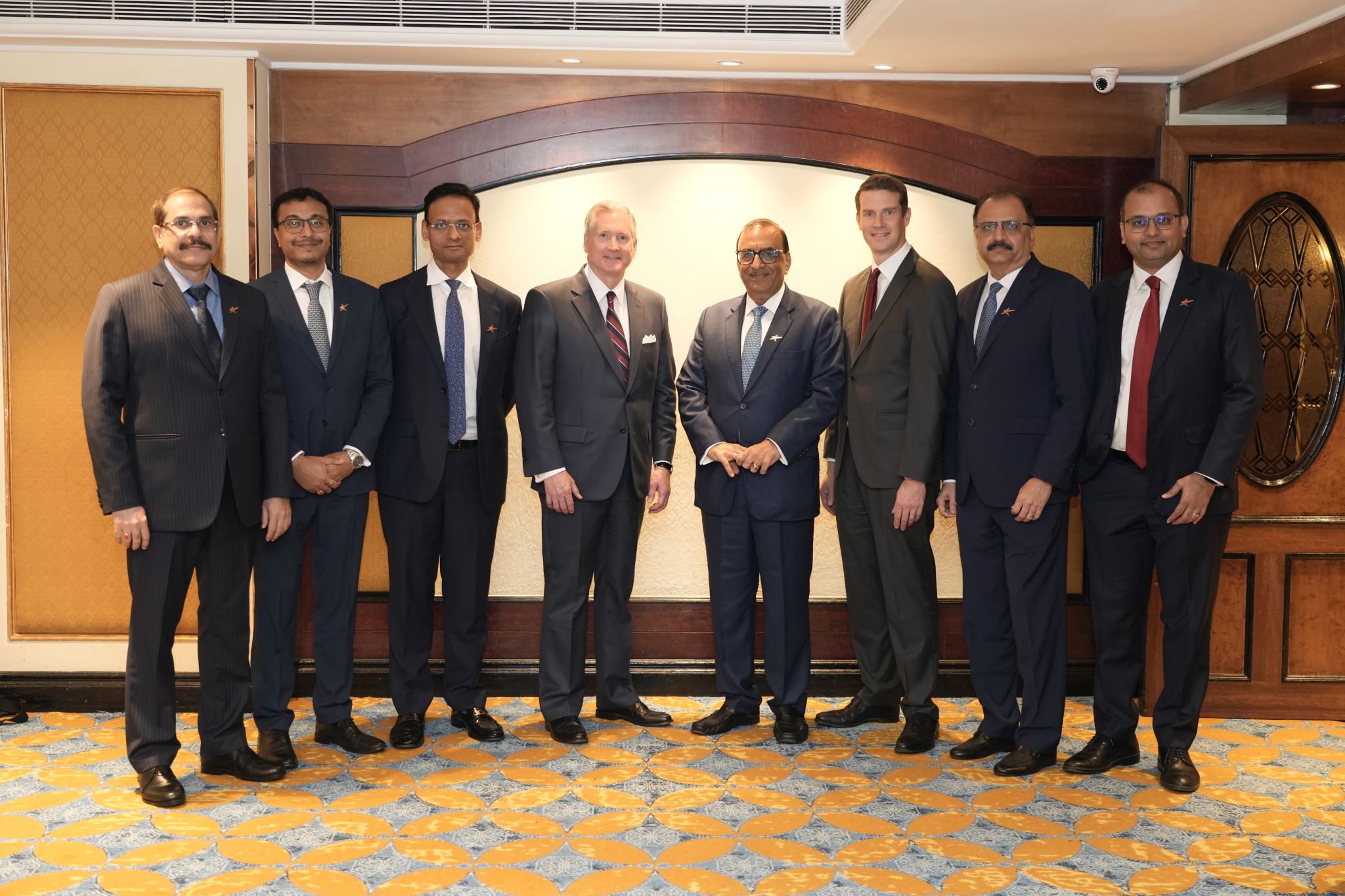

But why give up the brand name?
According to Dhruva-Ryan leadership, it’s about what comes “NEXT”.
Tax advisory in 2026 isn’t just about reading local tax codes; it’s about cross-border tax tech, data analytics, and massive software infrastructure…Ryan brings that technical muscle.
Ryan says it plans to continue investing in its Middle East operations.
Nimish Goel will continue leading the 130-plus Middle East team under the Ryan brand, so client relationships won’t change overnight.
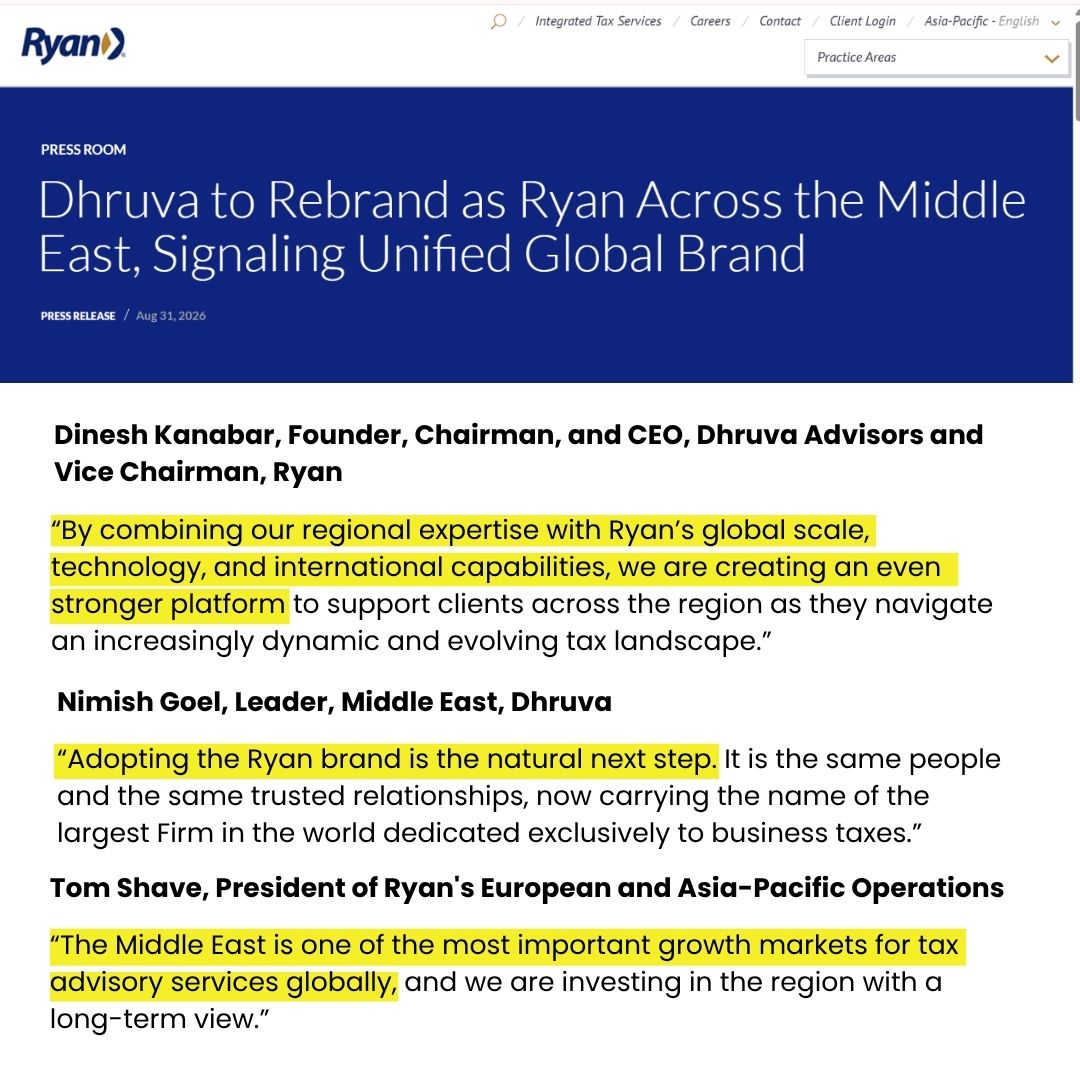
Big 4 Middle East gets a tough competitor
Dhruva was already competing with the Big 4 on specialist tax work.
Now Ryan brings global scale, technology and deeper pockets.
- For clients: global tax expertise + technology.
- For partners: a bigger platform to grow.
- For talent: more opportunities beyond the Big 4.
But insiders have mixed views
One Big 4 Partner sees the Dhruva-Ryan deal as a sign of what is coming: “AI is going to change the tax business much faster than many firms realise.”
Another Big 4 Partner we spoke to believes the deal reflects a fundamental shift in tax advisory.
“In 2026, tax advisory isn’t just about knowing tax law.
It is increasingly about tax technology, data analytics and the ability to operate across borders.
Building that technology platform from scratch is expensive and will take decades.
Partnering with a PE-backed US giant was the fastest way to stay competitive.”
An industry insider put it more simply: “It shows how quickly the tax business is moving towards technology, scale and global platforms.”
But not everyone sees it positively.
One industry veteran told us:
“Dhruva built one of the strongest independent Indian tax brands…Losing the name is a big deal.
It raises a difficult question: why couldn’t Dhruva raise capital independently and build the technology and global platform itself?”
And this is where Indian firms should pay attention
Tax is becoming a technology business.
AI is moving fast into tax.
The next battle in tax may not simply be about who has the best tax partners. It could be about who can afford to build the technology that makes those partners more productive.
So, the bigger question…Will India’s next generation of tax firms build global firms themselves or become part of global firms?
FAQs
Q: Who is the CEO of Dhruva Advisors?
A: Dinesh Kanabar is the Founder, Chairman & CEO of Dhruva Advisors. Post the Ryan acquisition, he became the Vice-Chairman of Ryan Tax Holdings, USA. He was Deputy CEO of KPMG India before stepping down in 2014 to start his own.
Q: How many countries is Dhruva Advisors present in?
A: Dhruva Advisors has 11 offices across India, Singapore, and the Middle East.
Q: How many partners does Dhruva Advisors have?
A: Dhruva has 38 partners and 500+ professionals (130+ in the Middle East).

