 TFS Gulf



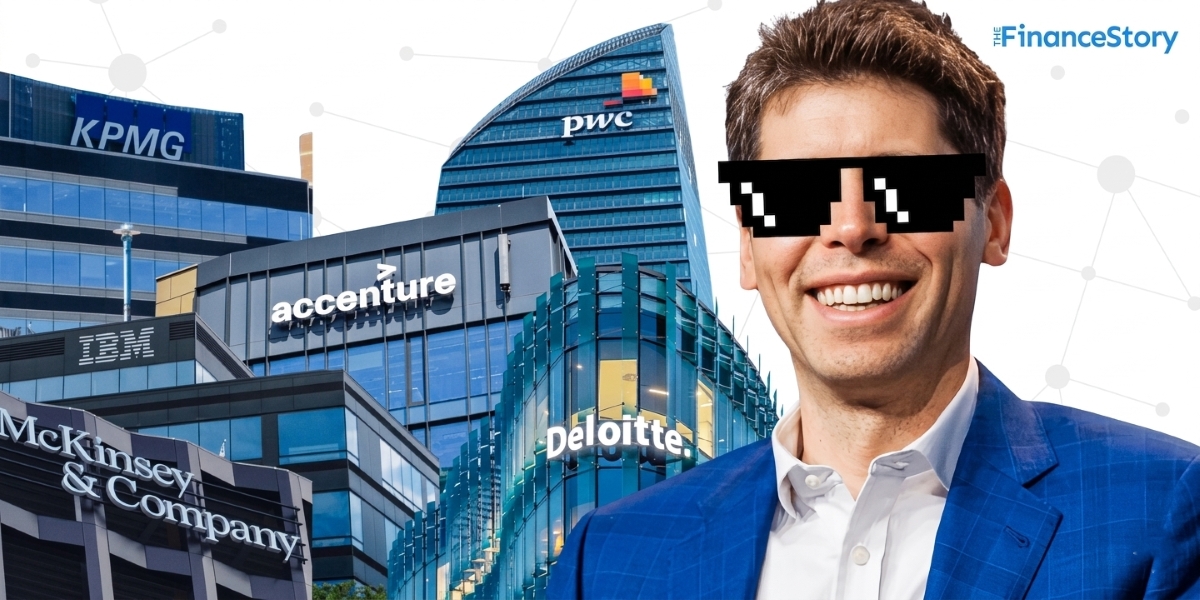
- OpenAI was supposed to kill the Big 4.
- Instead, it partnered with PwC to build AI agents for CFOs and get inside enterprises faster.
- At the same time, OpenAI is building its own deployment muscle.
- Wait…What exactly is happening? Many insiders call it a “Marriage of Necessity.”
OpenAI–PwC relationship began in 2024
PwC became one of the largest ChatGPT Enterprise customers and also started reselling OpenAI’s tools to thousands of corporate clients.
PwC says it is already actively working on GenAI projects with 950 of its top 1,000 US consulting clients.
Fast forward to May 2026, and both sides have doubled down. This time, the focus is clear: The CFO office.
Together they are building AI agents across some of finance’s most repetitive and high-value workflows, including:
- Planning & forecasting
- Reporting
- Procurement
- Payments monitoring
- Treasury
- Tax
- Accounting close
PwC and OpenAI are already building a procurement agent inside OpenAI’s finance team…using OpenAI as “customer zero” before taking it to enterprise clients.
Why is OpenAI’s big focus on CFO office?
Because finance may be one of the best places for AI agents to prove real enterprise value.
Finance teams sit at the centre of:
- Capital allocation
- Risk management
- Controls
- Compliance
- Strategic decision-making
….But much of the work is still manual, repetitive, and rules-driven.
AI agents can help:
- Review contracts and invoices against policy
- Monitor payments and exceptions
- Update forecasts as business conditions change
- Accelerate the month-end close
- Surface risks before quarter-end
- Generate reports and dashboards automatically
This moves AI beyond task automation.
But wait… wasn’t AI supposed to replace firms like PwC?
Yes.
However, OpenAI cannot penetrate enterprises deeply at scale on its own.
Why?
- Enterprise sales cycles are slow (6–24 months)
- Systems are locked (SAP, Oracle, legacy finance stacks)
- Risk and compliance barriers are high
- Internal change management is harder than the tech itself
By partnering with PwC, OpenAI gets something priceless: Enterprise relationships with pre-approved access to:
- CFO offices
- ERP transformations
- Audit and compliance systems
- Enterprise procurement cycles
- Finance workflow expertise
- Large-scale implementation teams
One insider described it this way: “OpenAI can build GPT-5.5 in a few months. A Fortune 500 company can take two years just to approve a new email vendor. That’s the bottleneck.”
And there’s another major reason: Liability.
If AI hallucinates while giving tax advice, makes a bad finance call, or creates a compliance breach, OpenAI doesn’t want to own that alone.
One source said flatly, “PwC becomes the buffer. The name on the engagement letter. That matters enormously to enterprise clients.”
Also read: OpenAI launches consulting division…Making McKinsey, Accenture, Big 4s nervous
PwC needs OpenAI just as much
Because their own clients are turning around and asking: “If AI can do this in seconds, why am I still paying for your team’s hours?”The
Partners are under pressure to adopt AI, NOT as a “tool,” but as a part of delivery.
OpenAI and its likes have forced Big 4s to pivot from being “doers” (who bill for hours worked) to those who charge for judgment and risk management.
Inside PwC, the mood is complicated, especially for young Partners.
Also read: PwC says clients are asking for an AI Discount?
Let’s not forget…
OpenAI recently launched The Deployment Company, a new initiative backed by over $4 billion to help enterprises build and deploy AI systems more directly.
In other words, OpenAI is starting to do what consulting firms have traditionally done.
Anthropic, too, launched a competing deployment company.
Goldman Sachs funded both.
Wrapping up…
Every implementation PwC runs with OpenAI, every client workflow they map, every compliance framework they build together…OpenAI is watching and learning.
For now, OpenAI needs PwC’s trust, relationships, and enterprise credibility.
PwC needs OpenAI’s technology to stay relevant.
It may look like a partnership…But it increasingly feels like a Marriage of Necessity.

