 TFS Gulf



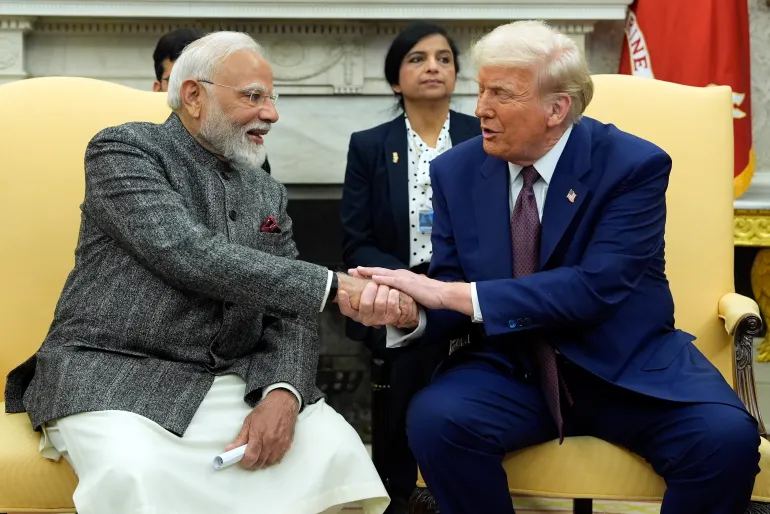
In early 2025, President Donald Trump reignited his tariff war, slapping major import duties on goods from Mexico, Canada, and China, fueling global trade tensions and economic uncertainty.
Now, India is firmly in his sights.
The U.S. remains India’s largest trading partner, with bilateral trade hitting $118.2 billion last year. However, escalating tariff disputes could strain this relationship.
With reciprocal tariffs looming, April could be a turning point in U.S.-India trade relations—potentially reshaping market dynamics, supply chains, and diplomatic ties.
The Tariff Showdown
Tit-for-Tat Tariffs
So to give you a background, India has historically maintained higher import tariffs on certain U.S. goods, leading to recent trade tensions. In response to U.S. pressure, India has made some adjustments:
-
Motorcycles: Tariffs reduced from 50% to 30%.
-
Bourbon Whiskey: Tariffs lowered from 150% to 100%.
Trump has threatened fresh reciprocal tariffs on Indian goods unless India slashes duties on U.S. imports.
The U.S. has reportedly asked India to remove tariffs on nearly all goods—except agricultural products.
Key sectors in focus? Automobiles, whiskey, and medical devices. (FT Report)
India’s Response
- India has already reduced tariffs on some U.S. goods, but a full-scale trade negotiation is underway.
- Commerce Minister Piyush Goyal has been in Washington, trying to strike a deal before new U.S. tariffs take effect.
April 2 deadline to impose reciprocal tariffs
Trump has doubled down on his “America First” stance, stating: “If India wants access to our market, they must play fair. Whatever you charge, I’m charging.”
His administration has warned that by mid-April, new tariffs on Indian steel, textiles, and IT services could be on the table if trade talks fail.
Impact on India’s Economy
Foreign Investor Exodus
- In the first week of March alone, Foreign Portfolio Investment or FPI pulled out approximately ₹24,753 crore, bringing the total net outflows for the year to ₹1.37 lakh crore. (Economic Times)
- Consumer Durables & FMCG Accounted for nearly 25% of FPI outflows in February.
Rupee Under Pressure
- The Indian currency has weakened for the fifth straight month, closing at ₹87.49/USD in February.
Sectoral Impact
- Manufacturing, agriculture, and tech exports could take a hit if tariffs escalate, increasing costs for Indian firms exporting to the U.S.
Why is this a big deal?
- India’s Trade Safeguards at Risk – New Delhi has long used tariffs to protect domestic industries. Removing them could expose Indian manufacturers to stiff global competition.
- No Reciprocity from the U.S. – Unlike past trade negotiations, the U.S. is not offering tariff reductions on Indian exports, making this a one-sided deal.
What’s Next?
With April approaching fast, India faces a critical decision: compromise to avoid new tariffs or brace for an intensified trade war.
Negotiations are ongoing, but the risk of escalation remains high.

